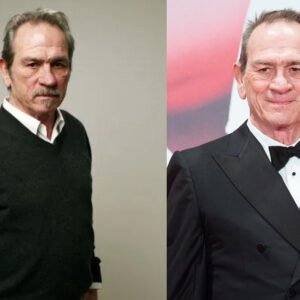
Asari Dokubo biography explores the Niger Delta militant leader’s journey from NDPVF founder to traditional ruler with $4.8M net worth and political influence.
Who is Asari Dokubo?
Asari Dokubo is a controversial Nigerian political figure, former militant leader, and traditional ruler who has been at the centre of Niger Delta politics for over two decades.
Born Melford Dokubo Goodhead Jr. on 1 June 1964 in Buguma, Rivers State, Asari Dokubo biography begins with his transformation from a middle-class Christian family to becoming Mujahid Dokubo-Asari after converting to Islam in the early 1990s. This name change marked the beginning of his radical journey in Niger Delta activism.
Asari rose to prominence as the president of the Ijaw Youth Council (IYC) in 2001, where he championed the cause of resource control and self-determination for the Ijaw people. In 2004, he founded the Niger Delta People’s Volunteer Force (NDPVF), one of the most notorious militant groups operating in Nigeria’s oil-rich Delta region.
His confrontational approach led to his arrest and treason charges in 2005 under President Olusegun Obasanjo’s administration. However, he was released in 2007 as part of President Umaru Yar’Adua’s amnesty programme. Since then, Asari has remained a prominent voice in Nigerian politics, supporting President Bola Tinubu whilst simultaneously criticising government policies.
In 2024, Asari Dokubo was formally recognised as the Amayanabo (traditional ruler) of Torusarama-Piri (Elem Kalabari Kingdom) in Rivers State, adding a traditional dimension to his already complex political persona. He continues to wield significant influence in the Niger Delta region, with an estimated net worth of $4.8 million.
Asari Dokubo Profile Summary
| Personal Information | Details |
|---|---|
| Full Name | Melford Dokubo Goodhead Jr. (birth name) |
| Muslim Name | Mujahid Dokubo-Asari (after conversion) |
| Commonly Known As | Asari Dokubo |
| Date of Birth | 1 June 1964 |
| Age | 61 years old (as of 2025) |
| Place of Birth | Buguma, Rivers State, Nigeria |
| State of Origin | Rivers State |
| Nationality | Nigerian (formerly), Beninese (citizen of Benin Republic since 2013) |
| Tribe/Ethnicity | Ijaw (Niger Delta) |
| Religion | Islam (converted from Christianity) |
| Occupation | Political Activist, Former Militant Leader, Traditional Ruler, Businessman |
| Traditional Title | Amayanabo of Torusarama-Piri (Elem Kalabari Kingdom) |
| Years Active | 1990s–present |
| Father | Court Judge (deceased) |
| Mother | Housewife (deceased) |
| Siblings | Four (names not publicly disclosed) |
| First Wife | Alhaja Zainab Asari Dokubo (deceased 2016) |
| Current Wife | Boma Dokubo |
| Children | Amirah, Hassan, Hussain, Osama |
| Notable Organization | Niger Delta People’s Volunteer Force (NDPVF) |
| Former Position | President, Ijaw Youth Council (2001-2004) |
| Net Worth | Estimated $4.8 million (₦3.36 billion) |
| Controversial Activities | Militancy, oil bunkering, political activism |
| @alhjasaridokubo |
Early Life and Family Background
Asari Dokubo was born on 1 June 1964 into a middle-class Christian family in Buguma, a town in Rivers State, Nigeria. His birth name was Melford Dokubo Goodhead Jr.
Family Structure
Asari’s father was a respected court judge, whilst his mother was a housewife dedicated to her family. He was one of five children in the family, with four siblings whose identities remain largely private.
Growing up in a relatively privileged household headed by a judicial officer provided Asari with early exposure to Nigeria’s legal system and governance structure. This background would later inform his arguments about justice and resource control in the Niger Delta.
Religious Transformation
Asari was raised as a Christian, following his family’s faith tradition. However, after dropping out of university in 1990, he underwent a significant personal transformation by converting to Islam.
This religious conversion was not merely spiritual but also ideological. He adopted the Muslim name Mujahid Dokubo-Asari, with “Mujahid” meaning “one who struggles” or “fighter” in Arabic—a name that would prove prophetic given his future as a militant leader.
His conversion coincided with a period of radicalisation triggered by his experiences with state violence during his university days, particularly an incident where a female student was shot during an anti-SAP protest.
Education Background
Asari Dokubo received both his primary and secondary education in Port Harcourt, Rivers State. He demonstrated academic promise during his early schooling years.
University Education (Incomplete)
In the late 1980s, Asari gained admission to study law at the University of Calabar. This was a prestigious achievement that aligned with his father’s career in the judiciary.
However, his university experience would become a turning point in his life. During the anti-Structural Adjustment Programme (SAP) riots whilst at the University of Calabar, Asari witnessed police shooting at student demonstrators. A female student named Nnenna, standing behind him, was shot and fell.
This traumatic incident radicalised Asari. In his own words: “I carried her with all the blood and everything. Though it was not fatal. From that day, I decided inside me that the Nigerian state must be made to explain to the people, to my people especially, what they are doing with the resources of the people.”

He dropped out of the University of Calabar in 1990 after just three years, citing problems with university authorities. His departure was driven more by his loss of interest in formal education and his growing desire to confront state authority.
Attempted Continuation
Asari later attempted to continue his legal studies at the Rivers State University of Science and Technology. However, his increasing activism made it impossible for him to focus on academics, and he again left without completing his degree.
From that point forward, Asari abandoned formal education entirely, choosing instead the path of political activism and militant resistance.
Political Activism and the Ijaw Cause
Early Political Involvement (1990s)
After leaving university, Asari attempted to enter mainstream politics. He ran unsuccessfully for political office in Rivers State on two occasions:
- 1992: First unsuccessful electoral bid
- 1998: Second failed attempt at political office
These electoral failures pushed Asari towards more confrontational forms of political engagement.
Formation of the Ijaw Youth Council
In 1998, a pivotal year for Niger Delta activism, the Ijaw Youth Council (IYC) was formed. Asari was a founding member and was appointed as the organisation’s first vice-president.
The IYC emerged during a period of heightened tension in the Niger Delta. The execution of Ken Saro-Wiwa and the Ogoni Nine in 1995 had galvanised indigenous communities across the Delta to demand justice and environmental remediation.
The Kaiama Declaration (1998)
In November 1998, under Asari’s influence, the IYC issued the historic Kaiama Declaration. This document expressed long-held Ijaw concerns about:
- Loss of control over their ancestral homeland
- Environmental degradation caused by oil extraction
- Marginalisation by the Nigerian state
- Exploitation by multinational oil companies
The declaration called on oil companies to suspend operations and withdraw from Ijaw territory. It pledged “to struggle peacefully for freedom, self-determination and ecological justice.”
The IYC prepared ‘Operation Climate Change’, a campaign of celebration, prayer, and direct action beginning 28 December 1998.
The Nigerian government responded with an immediate and brutal crackdown, sending military forces to occupy Ijaw communities. This government response would validate Asari’s growing belief that peaceful protest was insufficient.
Presidency of the Ijaw Youth Council (2001)
In 2001, Asari became president of the Ijaw Youth Council. Under his leadership, the IYC pursued an agenda of “Resource Control and Self Determination By Every Means Necessary”—a significant departure from the peaceful approach initially articulated in the Kaiama Declaration.
The phrase “by every means necessary” signalled Asari’s willingness to embrace armed struggle if peaceful methods failed.

Niger Delta People’s Volunteer Force (NDPVF)
Formation and Ideology (2004)
By 2004, Asari had retreated from public view and founded the Niger Delta People’s Volunteer Force (NDPVF). This militant organisation would become the most prominent armed group in the Delta during the mid-2000s.
The NDPVF was funded largely by local and regional politicians who sought to profit from the region’s oil revenue. These sponsors saw Asari’s group as a tool for political intimidation and control of lucrative oil-related criminal enterprises.
The NDPVF’s stated goals included:
- Forcing oil companies to compensate communities for environmental damage
- Securing greater resource control for Niger Delta indigenous peoples
- Achieving self-determination or outright independence for the region
However, the group also engaged in illegal activities including oil bunkering (pipeline tapping), kidnapping of oil workers, and armed violence against perceived enemies.
Conflict with Niger Delta Vigilante
The NDPVF quickly escalated into armed conflict with a rival group called the Niger Delta Vigilante (NDV), led by Ateke Tom. Both groups were vying for control of the Delta’s oil resources and the lucrative illegal oil trade.
Combat was concentrated primarily in Warri and Port Harcourt, Nigeria’s oil capital. The violence between these groups caused:
- Massive disruption to oil production
- Death of hundreds of people
- Displacement of communities
- Rising oil prices globally due to supply disruptions
“Operation Locust Feast” (2004)
In September 2004, the NDPVF declared an “all-out war” against the Nigerian state. Asari issued an ultimatum to multinational energy companies to shut down operations by 1 October 2004, threatening a major guerrilla operation called “Operation Locust Feast.”
The threat was credible. The NDPVF had acquired substantial weaponry, including AK-47 rifles and rocket-propelled grenades. Asari’s men patrolled the Delta’s rivers and creeks in speedboats with powerful outboard motors.
Asari boasted about the ease of arms acquisition: “We are very close to international waters, and it’s very easy to get weapons from ships.” Arms were acquired through:
- Transactions with shipping captains during illegal oil sales
- Nigerian soldiers returning from peacekeeping missions in Sierra Leone and Liberia
- Criminal syndicates operating in the Delta
Political Context and Sponsorship
Asari’s NDPVF had initially enjoyed the sponsorship of powerful political figures in Rivers State who used the militants for political purposes. However, when Asari’s agenda began diverging from his sponsors’ interests, they withdrew support and redirected funds to the rival NDV.
This loss of sponsorship, combined with Asari’s increasingly radical rhetoric, made him a liability to his former allies and a major problem for the Nigerian government.
Arrest, Treason Charges, and Release
Peace Talks and Arrest (2005)
As violence escalated and oil production plummeted, President Olusegun Obasanjo called Asari and Ateke Tom to Abuja for peace talks aimed at resolving the crisis.
The peace talks failed spectacularly. Asari refused to endorse the legitimacy of the Obasanjo government and publicly supported self-determination for the Ijaw people and independence for the Niger Delta.
This defiance proved costly. The Nigerian federal government arrested Asari and charged him with treason—a capital offence punishable by death.

Detention and Continued Influence
Despite his detention, Asari continued to communicate with his followers and remained an important symbolic figure for various Ijaw armed groups. His imprisonment was listed as a core grievance by militant organisations in the Delta.
Release and Amnesty (2007)
On 14 June 2007, newly installed President Umaru Yar’Adua released Asari on bail as part of his pledge to bring peace to the Niger Delta.
This release was strategic. Yar’Adua hoped that freeing Asari would pacify Ijaw militants and create space for dialogue. As part of broader amnesty incentives, the federal government began awarding massive cash rewards to former militant leaders.
Asari reportedly received an annual payment of $10 million (₦4 billion at the time) from Abuja as a “pipeline security protection fee” to protect Rivers State pipelines and creeks that militants had previously bombed and sabotaged.
This arrangement essentially paid former militants to stop doing what they had threatened to do—a controversial but pragmatic approach to securing oil infrastructure.
Citizenship Change and Move to Benin Republic (2013)
In 2013, Asari Dokubo made a dramatic decision: he renounced his Nigerian citizenship and became a citizen of the Benin Republic.
Reasons for the Move
Asari’s decision to leave Nigeria appeared motivated by:
- Disillusionment with the Nigerian state
- Security concerns
- Desire to establish a legacy beyond Nigeria’s borders
- Strategic positioning of his wealth outside Nigerian jurisdiction
Activities in Benin
After relocating to Cotonou, Benin’s economic capital, Asari invested significantly in education infrastructure. He built:
- Several schools for primary and secondary education
- Colleges for vocational training
- A university to provide higher education opportunities
These investments positioned him as a philanthropist in his adopted homeland whilst simultaneously demonstrating his wealth and influence.
His move to Benin also provided a safe base from which to continue influencing Nigerian politics without being subject to Nigerian law.
Traditional Ruler: Amayanabo of Elem Kalabari (2024)
Recognition as Traditional Ruler
In a significant development, Rivers State Governor Siminalayi Fubara formally recognised Asari Dokubo as the Amayanabo (paramount ruler) of Torusarama-Piri, also known as the Elem Kalabari Kingdom, in 2024.
This traditional title represents a remarkable transformation for Asari—from wanted militant to respected traditional authority. The recognition came with a certificate of chieftaincy presented at an official ceremony.
Responsibilities as Amayanabo
In his role as Amayanabo, Asari has taken on responsibilities including:

Combating Criminal Activities: On New Year’s Day 2025, King Dokubo-Asari warned illegal oil bunkers, drug dealers, sea pirates, and kidnappers to leave Elem Kalabari. He stated: “If you know anyone involved in oil bunkering here, whether a friend or relative, no matter how highly placed they are, tell them I said enough is enough. They must pack up and leave.”
Development Projects: He announced massive dredging and reclamation projects for Elem Kalabari, with 150 workers mobilised starting January 2025.
Education and Welfare: He promised scholarships for children and assured residents they would receive what is rightfully theirs from oil companies operating in the area.
This traditional role has given Asari institutional legitimacy and a platform for continued influence in the Niger Delta.
Relationship with President Bola Tinubu
Asari Dokubo’s relationship with President Bola Tinubu has been one of the most controversial aspects of his recent political involvement.
Support During 2023 Elections
Asari was one of Tinubu’s most vocal supporters during the 2023 presidential campaign. He:
- Organised rallies in support of Tinubu
- Defended Tinubu against critics
- Claimed to have invested over $2 million in Tinubu’s campaign
- Mobilised support in the Niger Delta region
Shortly after Tinubu’s inauguration in May 2023, Asari visited the Presidential Villa, where he addressed the press and made controversial statements about oil theft and military corruption.
Allegations of Betrayal and Criticism
However, by mid-2024, the relationship had soured considerably. Asari began openly criticising the Tinubu administration:
Alleged Betrayal: Asari accused Tinubu of betraying him and the Niger Delta after the elections. He claimed that despite his significant financial and political support, he was sidelined.
Ethnic Discrimination Claims: He criticised what he described as ethnic bias in Tinubu’s appointments, arguing that the Ijaw and Niger Delta people were being marginalised.
Pipeline Contract Claims: Asari claimed that Tinubu asked if he was interested in pipeline security contracts, suggesting the president was using patronage to manage former militants.
Criticism of Yoruba Politicians: By late 2024, Asari vowed never to support Yoruba politicians again, accusing them of repeatedly betraying the Ijaw and Niger Delta people.
Recent Developments (2024-2025)
Despite his criticisms, Asari has maintained some level of engagement with the administration. In October 2024, he claimed that Tinubu specifically asked him to speak to the press about oil bunkering and military corruption.

His relationship with the Tinubu administration exemplifies the transactional nature of Nigerian politics, where support is contingent on personal benefit and can quickly transform into opposition when expectations are unmet.
Asari Dokubo Biography: Net Worth and Business Interests
Estimated Net Worth
As of 2025, Asari Dokubo’s net worth is estimated at approximately $4.8 million (roughly ₦3.36 billion at current exchange rates). Some estimates place it as high as ₦622.5 million ($1.5 million) to $4.8 million, reflecting uncertainty about his actual wealth.
Sources of Wealth
Asari’s wealth derives from multiple sources:
Government Payments: The most controversial source has been the annual $10 million “pipeline security protection fee” he reportedly received from the Nigerian government following the 2007 amnesty. These payments were ostensibly for protecting oil infrastructure but were essentially payments to cease militant activities.
Oil-Related Businesses: Asari has investments in oil-related enterprises, leveraging his connections and knowledge of the Niger Delta oil industry.
Government Contracts: He has secured lucrative contracts related to pipeline security and other services in the Niger Delta.
Business Ventures: He owns various business interests, though specific details remain largely undisclosed.
Properties and Assets
Asari is known to own:
- A massive mansion in Obuama, Rivers State (reportedly worth hundreds of millions of naira)
- Properties in Benin Republic, including educational institutions
- Properties in Port Harcourt and other parts of Rivers State
- Luxury vehicles and boats used for navigating the Delta waterways
His wealth has been a source of controversy, with critics questioning how a former militant accumulated such substantial assets.
Personal Life: Wives and Children
First Wife: Alhaja Zainab Asari Dokubo
Asari’s first wife, Alhaja Zainab Asari Dokubo, was a significant figure in his life following his conversion to Islam. Tragically, she died in a car accident in 2016 whilst travelling to Ibadan.
Her death was a personal blow to Asari, who mourned her publicly.
Current Wife: Boma Dokubo
After Alhaja Zainab’s death, Asari married Boma Dokubo, who is his current wife. Boma has maintained a relatively low profile compared to her husband’s public persona.
Children
Asari has four children:
- Amirah Dokubo (daughter)
- Hassan Dokubo (son)
- Hussain Dokubo (son)
- Osama Dokubo (son)
His children’s names reflect his Islamic faith. He has largely kept his children out of the public eye, protecting them from the controversies surrounding his political activities.

Controversies and Public Perception
Oil Theft Allegations
In June 2023, Asari made headlines by accusing the Nigerian military of being at the centre of oil theft in the Niger Delta. He claimed that “99% of oil theft can be traced to the military.”
This allegation provoked a strong response from military authorities, who challenged Asari to provide evidence or face them “on the battlefield.” The Defence Headquarters described his threats as “laughable.”
Private Army Claims
Asari has claimed to maintain a private security force, which he refers to as an “army.” In 2024, he allegedly threatened to shoot down a military helicopter that hovered around his residence.
Human rights organisation HURIWA has called for his arrest, accusing the government of applying double standards by not taking action against Asari whilst cracking down on other separatist movements like IPOB.
Threat to Shoot Down Military Aircraft
In October 2024, Asari allegedly threatened to shoot down military aircraft hovering near his mansion. Instead of arresting him, the Defence Headquarters spokesman called his comments “laughable,” sparking accusations of preferential treatment due to his relationship with President Tinubu.
Wike-Military Clash Commentary (November 2025)
Most recently, in November 2025, Asari weighed in on the confrontation between FCT Minister Nyesom Wike and a naval officer over disputed land in Abuja. Asari called for the naval officer to be court-martialled, stating: “I’m not taking sides with Wike; I’m taking sides with the law, the rule, and convention.”
Support for Governor Fubara
Asari has been a vocal supporter of Rivers State Governor Siminalayi Fubara in his political battle with former governor and FCT Minister Nyesom Wike. He has warned that the Rivers people “will not surrender” to Wike and has pledged to protect Fubara’s administration.
Relationship with IPOB and Biafra
Asari’s relationship with Biafran separatist movements has been complex. He has attended events with Ralph Uwazurike of MASSOB and initially praised Nnamdi Kanu of IPOB.
However, he later distanced himself from IPOB and in 2021 formed the “Biafra de facto Customary Government” (BCG) as an alternative to IPOB. This move was widely criticised as opportunistic.
IPOB has warned Asari to stay away from their movement, and there is significant hostility between Asari and Igbo separatist groups.
Public Perception
Public perception of Asari is deeply divided:
Supporters view him as:
- A fearless fighter for Niger Delta rights
- A victim of Nigerian state oppression
- A folk hero willing to confront powerful interests
- An advocate for resource control and environmental justice
Critics view him as:

- A opportunistic militant who became wealthy through extortion
- A political mercenary who supports whoever pays him
- A hypocrite who profited from the same oil industry he claimed to fight
- A destabilising force who has caused violence and economic damage
Legacy and Impact on Niger Delta Politics
Contributions to Niger Delta Activism
Despite the controversies, Asari Dokubo’s impact on Niger Delta politics is undeniable:
Resource Control Debate: He forced national conversation about resource control and fiscal federalism in Nigeria.
Environmental Justice: His activism highlighted environmental degradation caused by oil extraction.
Amnesty Programme: His militancy contributed to the federal government’s decision to create the Niger Delta amnesty programme, which has reduced violence in the region.
Political Consciousness: He raised political consciousness amongst Ijaw youth about their rights and marginalisation.
Criticism of His Methods
However, his methods have been widely criticised:
Violence: His militant campaigns resulted in deaths, kidnappings, and economic disruption.
Oil Theft: The NDPVF engaged in illegal oil bunkering, contributing to environmental damage and economic losses estimated at billions of dollars.
Political Manipulation: Critics argue he allowed himself to be used by politicians for their narrow interests.
Enrichment: His personal enrichment through government payments has undermined the moral authority of his activism.
Current Influence
As of 2025, at age 61, Asari remains an influential figure in Niger Delta politics. His traditional title as Amayanabo gives him institutional legitimacy, whilst his wealth and connections ensure his continued relevance.
However, his shifting political loyalties and controversial statements have diminished his moral authority compared to his early days as an idealistic activist.
Conclusion
Asari Dokubo’s life represents the complexities and contradictions of Niger Delta politics. From Melford Goodhead Jr., the son of a court judge studying law, to Mujahid Dokubo-Asari, the militant leader who held the Nigerian state hostage, to finally Amayanabo of Elem Kalabari, his journey has been extraordinary.

The Asari Dokubo biography reveals a man shaped by trauma—the shooting of a fellow student during protests radicalised him against the Nigerian state. His conversion to Islam provided ideological framework for his struggle. His military campaigns forced Nigeria to address Niger Delta grievances through the amnesty programme.
Yet his legacy is deeply controversial. Did he fight for justice or personal enrichment? Was he a freedom fighter or an extortionist? A principled activist or a political mercenary?
The answer likely contains elements of all these characterisations. Asari’s $4.8 million net worth, his multiple properties, and his comfortable lifestyle today stand in stark contrast to the poverty and environmental degradation still faced by most Niger Delta communities.
His relationship with President Tinubu—from enthusiastic supporter to bitter critic—epitomises the transactional nature of Nigerian politics. His threats against the military whilst enjoying apparent immunity highlight the double standards in Nigerian law enforcement.
At 61, Asari Dokubo remains as combative and controversial as ever. Whether hosting Dutch researchers studying resource extraction or calling for military officers to be court-martialled, he continues to make headlines. As Amayanabo, he now wields traditional authority in addition to his political influence.
The question remains: Will history remember Asari Dokubo as a champion of Niger Delta rights or as an opportunist who profited from conflict? Perhaps the truth lies somewhere in between—a complicated figure in Nigeria’s complicated political landscape.
FAQs About Asari Dokubo Biography
Q1: How old is Asari Dokubo?
Asari Dokubo was born on 1 June 1964, making him 61 years old as of 2025.
Q2: What is Asari Dokubo’s real name?
His birth name was Melford Dokubo Goodhead Jr. After converting to Islam, he adopted the name Mujahid Dokubo-Asari.
Q3: What is Asari Dokubo’s net worth?
Asari Dokubo’s net worth is estimated at approximately $4.8 million (₦3.36 billion) as of 2025, derived from government payments, oil-related businesses, and other ventures.
Q4: Is Asari Dokubo still a Nigerian citizen?
No, Asari renounced his Nigerian citizenship in 2013 and became a citizen of the Benin Republic, though he maintains significant influence in Nigerian politics.
Q5: Who is Asari Dokubo’s wife?
Asari’s current wife is Boma Dokubo. His first wife, Alhaja Zainab Asari Dokubo, died in a car accident in 2016.
Q6: How many children does Asari Dokubo have?
Asari has four children: Amirah, Hassan, Hussain, and Osama Dokubo.
Q7: What is the NDPVF?
The Niger Delta People’s Volunteer Force (NDPVF) was a militant group founded by Asari in 2004 that fought for resource control and self-determination in the Niger Delta, often through violent means.
Q8: Why was Asari Dokubo charged with treason?
Asari was charged with treason in 2005 after refusing to endorse President Obasanjo’s government and publicly supporting self-determination and independence for the Niger Delta.
Q9: What is Asari Dokubo’s traditional title?
In 2024, Asari was recognised as the Amayanabo (paramount ruler) of Torusarama-Piri, also known as the Elem Kalabari Kingdom, in Rivers State.
Q10: Does Asari Dokubo support President Tinubu?
Asari initially supported Tinubu’s 2023 presidential campaign, claiming to have invested over $2 million. However, by 2024, he began criticising Tinubu for allegedly betraying the Niger Delta, though he maintains occasional engagement with the administration.