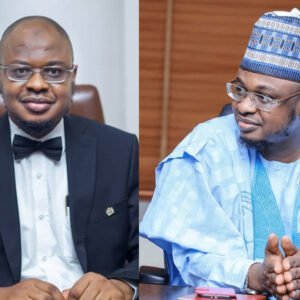
Discover Nyesom Wike biography including his age, net worth, political career as Rivers State Governor and FCT Minister, family, wife, controversies, infrastructure projects, and his role in Nigerian politics.
Who is Nyesom Wike?
Nyesom Ezenwo Wike is a Nigerian politician, lawyer, and current Minister of the Federal Capital Territory (FCT).
Born on 13 December 1967 in Rumuepirikom, Obio-Akpor, Rivers State, Wike served as the sixth Governor of Rivers State from 2015 to 2023. He is widely recognised for his aggressive infrastructure development projects, which earned him the nickname “Mr Project”.
An ethnic Ikwerre from Southern Nigeria, Wike is a member of the Peoples Democratic Party (PDP) despite serving in the All Progressives Congress (APC)-led federal administration. He is known for his bold political moves, strong influence in Nigerian politics, and his ongoing political crisis with his successor, Governor Siminalayi Fubara.
President Bola Tinubu appointed Wike as FCT Minister in August 2023 following his unsuccessful bid for the PDP presidential ticket against Atiku Abubakar.
Nyesom Wike Profile Summary
| Personal Information | Details |
|---|---|
| Full Name | Ezenwo Nyesom Wike |
| Date of Birth | 13 December 1967 |
| Age | 57 years old (as of 2025) |
| Place of Birth | Rumuepirikom, Obio-Akpor, Rivers State, Nigeria |
| State of Origin | Rivers State |
| Nationality | Nigerian |
| Tribe/Ethnicity | Ikwerre |
| Religion | Christianity |
| Occupation | Politician, Lawyer, Minister |
| Current Position | Minister of the Federal Capital Territory (FCT) |
| Political Party | Peoples Democratic Party (PDP) |
| Education | LL.B. (Bachelor of Laws), Rivers State University; M.A. Political and Administrative Studies |
| Spouse | Hon. Justice Eberechi Suzzette Nyesom-Wike |
| Children | Three (Jordan, Joaquin, and Jazmyne) |
| Parents | Reverend Nlemanya Wike (father) |
| Net Worth | Estimated $200-620 million |
| National Honour | Commander of the Order of the Niger (CON) |
| Nickname | Mr Project |
Early Life and Education Background
Ezenwo Nyesom Wike was born on 13 December 1967 in Rumuepirikom, located in Obio-Akpor Local Government Area of Rivers State, Nigeria.
He was born into the family of Reverend Nlemanya Wike, reflecting a family deeply rooted in Christian values and community service. His father was a respected clergyman who influenced Wike’s early moral development.
As an ethnic Ikwerre, Wike grew up in the heart of Rivers State. The Ikwerre people are one of the indigenous ethnic groups in the Niger Delta region. This background would later shape his political career in the oil-rich state.
Primary and Secondary Education
Wike attended Government Secondary School Eneka in Obio-Akpor, Rivers State, for his secondary education. He sat for his O’level examinations at the same institution, demonstrating academic capability from an early age.
His time at Government Secondary School Eneka laid the foundation for his future legal and political career. The school was known for producing several notable figures in Rivers State politics.
University Education and Legal Training
Wike proceeded to the Rivers State University of Science and Technology (RSUT), now known as Rivers State University, where he studied Law.
He obtained a Bachelor of Laws (LL.B.) degree from RSUT. Following his graduation, he attended the Nigerian Law School in 1997, a mandatory requirement for legal practice in Nigeria. He was called to the Nigerian Bar in 1997.
Wike furthered his education by obtaining a Master of Arts (M.A.) degree in Political and Administrative Studies from Rivers State University. This additional qualification provided him with deeper insights into governance and public administration.
In March 2025, Wike was awarded an honorary doctorate degree in Law by the University of Calabar during the institution’s 37th convocation ceremony, recognising his contributions to public service and development.
Early Legal Practice
Before entering full-time politics, Wike worked briefly in private legal practice. His experience as a lawyer equipped him with negotiation skills, legal knowledge, and persuasive abilities. These qualities would prove invaluable in his subsequent political career.
Political Career and Rise to Prominence
Local Government Chairman (1999-2007)
Nyesom Wike began his political career in 1999 following Nigeria’s return to democratic governance. He was elected as the Executive Chairman of Obio-Akpor Local Government Area, one of the largest and most economically important local councils in Rivers State.
He served two consecutive terms from 1999 to 2007, winning re-election in 2003. During his tenure, Wike gained recognition for his leadership abilities and administrative skills.
His performance at the local government level included:
- Development of local infrastructure
- Improvement of health facilities
- Enhancement of educational opportunities for residents
- Effective revenue generation and management
Wike’s success as local government chairman established him as a rising political figure in Rivers State. His grassroots connection and administrative competence caught the attention of state-level politicians.
Chief of Staff to Rivers State Governor (2007-2011)
In 2007, Wike was appointed Chief of Staff to Governor Rotimi Amaechi. This position placed him at the centre of Rivers State governance and policymaking.
As Chief of Staff, Wike was responsible for:
- Coordinating government activities
- Managing relationships with key stakeholders
- Advising the governor on policy matters
- Overseeing the implementation of government programmes
He also served as General Manager of Governor Amaechi’s re-election campaign, demonstrating his political strategy skills. However, his relationship with Amaechi would later deteriorate dramatically, becoming one of the most significant political feuds in Rivers State history.
Minister of State for Education (2011-2013)
On 14 July 2011, President Goodluck Jonathan appointed Wike as Minister of State for Education. This federal appointment elevated his profile beyond Rivers State.
During his tenure, Wike focused on:
- Reforming Nigeria’s basic education sector
- Providing access to quality education for approximately 9 million Almajiri children in Northern Nigeria
- Implementing nationwide educational reforms
- Collaborating with state governments on education policies
He worked alongside Ruqayyah Ahmed Rufa’i, who served as the substantive Minister of Education during this period.
Federal Minister of Education (2013-2014)
In September 2013, after Ruqayyah Ahmed Rufa’i was sacked, Wike was promoted to Federal Minister of Education. This made him the substantive head of Nigeria’s education ministry.
However, Wike’s tenure as Federal Minister was relatively brief. He resigned in 2014 to pursue his governorship ambition in Rivers State. Viola Onwuliri replaced him as Minister of Education.
Governor of Rivers State (2015-2023)
The 2015 Gubernatorial Election
In December 2014, Wike won the Rivers State PDP gubernatorial primary election. He chose former Secretary to the State Government, Ipalibo Banigo, as his running mate for deputy governor.
The 11 April 2015 gubernatorial election was fiercely contested. Wike defeated Dr Dakuku Peterside of the All Progressives Congress (APC) and Tonye Princewill of the Labour Party.
However, the election results were controversial. The Independent National Electoral Commission (INEC) declared that Wike received 1,029,102 votes. However, the tribunal was informed that only 292,878 voters were accredited with card readers.
Election Tribunal Controversy
On 13 May 2015, the Rivers State Election Tribunal sitting in Abuja commenced hearings on Wike’s election. Dr Dakuku Peterside challenged the results, citing malpractices and non-compliance with electoral laws.
Wike opposed the Abuja venue, arguing that the tribunal should sit in Port Harcourt. However, Justice Zainab Bulkachawa, then President of the Court of Appeal, ordered that the tribunal be held in Abuja for security reasons.
On 24 October 2015, the tribunal nullified Wike’s election and ordered a rerun within 90 days. Wike appealed the decision, and the case continued through the appellate courts.
Re-election in 2019
Despite the controversies surrounding his first term, Wike ran for re-election in 2019. On 3 April 2019, after initially suspending the announcement, INEC declared Wike the winner of the Rivers State governorship election.
He took the oath of office on 29 May 2019 at Yakubu Gowon Stadium in Port Harcourt. In his inaugural address, he pledged to prioritise Rivers State’s development above all else.
Achievements as Governor
Wike’s eight-year tenure as Governor was marked by aggressive infrastructure development. His nickname “Mr Project” reflected his focus on visible, large-scale projects.
Key achievements included:
- Construction of numerous flyovers and road networks in Port Harcourt
- Building of primary and secondary schools across the state
- Development of health facilities and hospitals
- Urban renewal projects that transformed Port Harcourt’s landscape
- Creation of the Real Madrid Football Academy in Rivers State
In June 2019, Wike declared free primary and secondary education throughout Rivers State. This policy was met with both appreciation from parents and concerns from educational administrators about sustainability.
In 2019, Wike announced free registration for Rivers State residents participating in the annual Joint Admissions and Matriculation Board (JAMB) examinations.
In 2022, Wike signed into law legislation strengthening women’s rights to inherit property. This progressive law addressed longstanding gender discrimination in inheritance practices.
The 2023 Presidential Bid
In March 2022, Wike declared his intention to run for President of Nigeria under the PDP platform ahead of the 2023 general elections.
The PDP presidential primary election was held at the MKO Abiola National Stadium in Abuja on 28-29 May 2022. Wike emerged as the first runner-up with 237 votes, losing to former Vice President Atiku Abubakar who secured 371 votes.
The loss created significant animosity between Wike and Atiku. Wike felt aggrieved by the outcome and the subsequent refusal to select him as Atiku’s running mate. This rift would have profound consequences for the PDP’s performance in the 2023 presidential election.
Wike’s group, known as the G-5 Governors or “Integrity Group,” demanded the resignation of PDP National Chairman Iyorchia Ayu as a condition for supporting Atiku. When their demands were not met, they worked against the PDP in the election.
On 20 October 2024, Wike publicly told Atiku to “pack up and go home,” signalling the complete breakdown of their relationship.
Minister of the Federal Capital Territory (2023-Present)
On 27 July 2023, President Bola Ahmed Tinubu sent Wike’s name, along with 27 others, to the 10th Nigerian Senate as ministerial nominees. This was unexpected, as Wike was a prominent PDP member and Tinubu’s APC had just defeated the PDP in the presidential election.
Wike was screened by the Senate on 31 July 2023. During his screening, he declared that President Tinubu would not regret nominating him as a minister. He was subsequently confirmed and appointed Minister of the Federal Capital Territory on 16 August 2023.
As FCT Minister, Wike has:
- Embarked on ambitious infrastructure revitalisation projects in Abuja
- Controversially demolished buildings and structures he deemed illegally built
- Improved security measures in the capital territory
- Enhanced administrative efficiency
- Overseen land redistribution and urban planning initiatives
His tenure has been characterised by aggressive action and controversy, particularly regarding demolitions. Critics accuse him of power abuse and disregard for property rights, whilst supporters praise his determination to restore order to Abuja’s development.
Career Milestones and Achievements
| Year | Position/Achievement | Organisation |
|---|---|---|
| 1997 | Called to Nigerian Bar | Nigerian Law School |
| 1999-2007 | Elected Executive Chairman (two terms) | Obio-Akpor Local Government Area |
| 2007-2011 | Chief of Staff to Rivers State Governor | Rivers State Government |
| 2011-2013 | Minister of State for Education | Federal Government of Nigeria |
| 2013-2014 | Federal Minister of Education | Federal Government of Nigeria |
| 2015-2023 | Sixth Governor of Rivers State (two terms) | Rivers State Government |
| 2019 | Declared free primary and secondary education | Rivers State |
| 2022 | Contested PDP Presidential Primary (First Runner-Up) | Peoples Democratic Party |
| 2023-Present | Minister of the Federal Capital Territory | Federal Government of Nigeria |
| 2025 | Awarded Honorary Doctorate in Law | University of Calabar |
The Rivers State Political Crisis
Origins of the Wike-Fubara Conflict
One of the most significant controversies in Nyesom Wike’s career is his ongoing political feud with his successor, Governor Siminalayi Fubara.
Wike had handpicked Fubara, his former accountant-general, as his successor for the 2023 gubernatorial elections. Fubara won the election on the PDP platform with Wike’s support and was inaugurated on 29 May 2023.
However, their relationship deteriorated rapidly after Fubara assumed office. The conflict centres on control of Rivers State’s political structures, with Wike allegedly attempting to control state affairs despite no longer being governor.
The 2023 Assembly Crisis
On 29 October 2023, a section of the Rivers State House of Assembly Complex was bombed by suspected arsonists. This incident occurred amidst mounting tensions between Fubara and lawmakers loyal to Wike.
In December 2023, 27 members of the Rivers State House of Assembly defected from the PDP to the APC. This defection triggered constitutional debates about whether their seats should be declared vacant.
The Rivers State High Court in Port Harcourt declared the seats of the defecting lawmakers vacant. However, the defectors challenged this decision, leading to protracted legal battles.
Presidential Intervention and Peace Deals
On 18 December 2023, President Tinubu convened a meeting at the Presidential Villa in Abuja. Wike and Fubara signed a peace deal intended to end the crisis.
On 20 December 2023, the lawmakers withdrew their impeachment notice against Governor Fubara. However, the peace was short-lived.
On 4 January 2024, Edison Ehie, the factional speaker leading a four-member Fubara-backed assembly, resigned. He withdrew a contempt suit against pro-Wike lawmakers, suggesting the crisis might be ending.
The Budget Controversy
In December 2023, Fubara presented the ₦800 billion 2024 budget to a four-member assembly loyal to him. He signed the appropriation bill into law on 14 December 2023.
However, on 22 January 2024, a Federal High Court in Abuja set aside the budget, ruling that it was not properly passed.
On 10 October 2024, the Court of Appeal in Abuja affirmed the nullification of the Rivers 2024 budget. The appellate court confirmed pro-Wike lawmakers as the legitimate legislative authority.
Governor Fubara appealed to the Supreme Court, insisting the seats of defected lawmakers remained vacant.
State of Emergency Declaration
In March 2025, the political crisis escalated dramatically. President Tinubu declared a six-month state of emergency in Rivers State.
Tinubu suspended Governor Fubara, his deputy Ngozi Odu, and all members of the State House of Assembly. He appointed retired Vice Admiral Ibok-Ete Ibas, former Chief of Naval Staff, as the state’s sole administrator.
The state of emergency was triggered by:
- Persistent pipeline explosions and security challenges
- The political deadlock between Fubara and Wike
- Violence, including the bombing of local government secretariats
- The constitutional crisis over the legitimacy of the state assembly
The Supreme Court later nullified the local government elections conducted by Fubara’s administration in February 2024. The court restored Martin Amaewhule’s position as speaker and reinstated the pro-Wike lawmakers as legitimate members of the assembly.
Reconciliation Efforts
In May 2025, reports emerged that the suspended Governor Fubara visited Wike alongside two governors seeking reconciliation. Wike confirmed the visit but stated that Fubara needed to take more conciliatory steps.
According to Presidency sources, President Tinubu brokered a truce between Fubara and Wike. Key conditions of the reconciliation reportedly include:
- Fubara serving out his tenure but not seeking re-election in 2027
- Withdrawal of all impeachment proceedings against Fubara
- Wike nominating chairmen for all 23 local government areas
- Payment of outstanding allowances to the 27 pro-Wike lawmakers
As of November 2025, the political crisis continues to evolve, with both sides maintaining their positions despite reconciliation attempts.
Conflict with Rotimi Amaechi
Wike’s political journey has been significantly marked by his tumultuous relationship with his predecessor, Rotimi Amaechi.
Initially, they were close allies. Wike served as Amaechi’s Chief of Staff from 2007 to 2011 and was instrumental in Amaechi’s re-election campaign.
However, their relationship soured dramatically over time, leading to public disputes and serious allegations.
Allegations of Corruption Against Amaechi
Upon assuming office as Governor in 2015, Wike accused Amaechi of financial misconduct. He alleged that Amaechi misappropriated state funds to finance President Muhammadu Buhari’s 2015 campaign.
Wike claimed that Amaechi sold state-owned oil and gas assets amounting to $309 million to fund the APC campaign. Amaechi consistently denied these allegations.
The feud between Wike and Amaechi became one of the most bitter political rivalries in Rivers State history. It divided the state along factional lines and influenced subsequent political alignments.
Personal Life: Wife, Children and Family
Marriage and Family
Nyesom Wike is married to Hon. Justice Eberechi Suzzette Nyesom-Wike (née Obuzor). She is a highly accomplished jurist serving as a judge of the Rivers State High Court of Justice.
Justice Eberechi hails from Ahoada West Local Government Area of Rivers State. She was born on 24 May 1972 to Dr Ikechukwu Amadi Obuzor of Odiokwu.
She studied Law at the Rivers State University of Science and Technology in Port Harcourt, where she and Nyesom Wike were classmates. She proceeded to the Nigerian Law School and was called to the Bar on 25 February 1998.
Justice Eberechi also holds a Master’s degree in Law (LL.M.) from the University of Sussex in the United Kingdom, obtained through the prestigious Chevening Scholarship.
She has played a visible role during Wike’s governorship and ministerial tenure. She often participates in civic events and supports causes related to education, women’s rights, and social justice.
Children
The couple is blessed with three children:
- Jordan Wike (eldest son)
- Joaquin Wike (second son)
- Jazmyne Wike (daughter)
Wike maintains relative privacy regarding his children’s lives. However, they are occasionally seen at official events, always well-dressed and well-behaved.
Wike is known to be a devoted family man despite his demanding political career. He balances his public responsibilities with family time, often seen playing golf and attending events with his children.
Business Interests and Net Worth
Nyesom Wike’s net worth has been subject to various estimates, with figures ranging widely depending on the source.
Estimated Net Worth
As of 2025, reliable estimates place Nyesom Wike’s net worth between:
- Conservative estimates: $200-250 million
- Mid-range estimates: $550-600 million
- Higher estimates: Up to $620-950 million
These figures position him amongst the wealthiest current and former governors in Nigeria. Various sources rank him as the second or third richest governor in Nigeria’s recent history.
Sources of Wealth
Wike’s wealth is derived from multiple sources:
Political Career: His long tenure in public service provided influence and access to opportunities. Positions held include local government chairman, state chief of staff, federal minister, state governor, and FCT minister.
Legal Practice: Before entering full-time politics, Wike worked as a legal practitioner. His legal background provided initial capital and professional networks.
Real Estate Holdings: Wike owns expensive properties in:
- Port Harcourt (multiple properties)
- Abuja (residential and commercial properties)
- Lagos
- Enugu
These properties generate rental income and capital appreciation.
Agricultural Investments: He has invested in large-scale farm projects and land deals in Rivers State and beyond, tapping into agricultural subsidies and rural development programmes.
Government Contracts: His influence in Rivers State and at the federal level has provided access to development contracts and government-linked partnerships.
Lifestyle and Assets
Wike is known for his luxury car collection, including:
- Mercedes-Benz G-Wagon
- Lexus LX SUVs
- Toyota Land Cruiser Prado
- Armoured Toyota Hilux vehicles
Many of these vehicles are state-funded but some are reportedly personally owned.
His current role as FCT Minister allows him continued access to development contracts and government-linked partnerships in Abuja’s infrastructure sector.
Political Philosophy and Leadership Style
“Wikeism” and Political Ideology
Wike’s supporters have dubbed his political approach “Wikeism”. This philosophy revolves around:
- Populist engagement with grassroots constituents
- Bold, aggressive action on development projects
- Unapologetic defence of his constituency
- Strong-arm tactics when dealing with opponents
- Loyalty to political allies and ruthlessness towards enemies
Wike is known for his assertive, sometimes combative leadership style. He does not shy away from confrontation and has engaged in public disputes with numerous political figures.
Infrastructure Development Focus
As Governor, Wike prioritised visible, large-scale infrastructure projects. His “Mr Project” nickname reflects this focus on tangible development outcomes.
He believed that infrastructure development was the key to transforming Rivers State’s economy and improving citizens’ quality of life. His administration commissioned projects at an unprecedented pace.
Critics argue that Wike’s focus on infrastructure came at the expense of other important sectors. They also question the sustainability and maintenance of the numerous projects commissioned towards the end of his tenure.
Controversial Governance Approach
Wike’s tenure has been marked by controversies:
Demolitions: As both Governor and FCT Minister, Wike has been criticised for demolishing buildings and structures deemed illegal. Critics accuse him of power abuse and disregard for property rights.
Autocratic Tendencies: Opponents describe his leadership style as autocratic, with limited tolerance for dissent within his political camp.
Political Feuds: Wike has engaged in numerous high-profile political battles, including with Rotimi Amaechi, Atiku Abubakar, and now Siminalayi Fubara.
Control Issues: The crisis with Fubara suggests Wike struggles to relinquish control of political structures even after leaving office.
Public Perception
Public perception of Wike remains deeply divided:
Supporters view him as:
- A development-focused leader who transformed Rivers State
- A strong defender of Rivers State interests
- A political strategist with significant influence
- A leader who gets things done regardless of opposition
Critics regard him as:
- An autocratic leader with little tolerance for opposition
- A politician motivated primarily by power and control
- Someone who abuses public office for personal gain
- A destabilising force in Nigerian politics
Awards and Recognition
Throughout his career, Nyesom Wike has received several accolades:
National Honours:
- Commander of the Order of the Niger (CON) – Nigeria’s national honour recognising distinguished service
Governance Awards:
- Governor of the Year Award 2017 – conferred by The Sun Newspapers
- Good Governance Award 2021 – conferred by Mayorkings Agency Group
- Best Governor Award 2021 – Nigerian Social Media Awards
- Human Rights Award 2021 – conferred by the National Human Rights Commission (NHRC)
Academic Honours:
- Honorary Doctorate Degree in Law (2025) – University of Calabar
These awards recognise his contributions to governance, infrastructure development, human rights, and public service.
Legacy and Impact on Nigerian Politics
Transformation of Rivers State
Wike’s most visible legacy is the physical transformation of Rivers State, particularly Port Harcourt. The numerous flyovers, road networks, schools, and public buildings commissioned during his tenure changed the state’s landscape.
Whether these projects represent sustainable development or merely showcase projects remains debated. However, the physical impact on Rivers State’s infrastructure is undeniable.
Political Influence and Strategy
Wike has emerged as one of Nigeria’s most influential politicians. His ability to navigate complex political situations and his willingness to take bold positions have made him a significant power broker.
His decision to accept a ministerial position in an APC-led government whilst remaining a PDP member demonstrated his pragmatic approach to politics. This move shocked many observers but showcased Wike’s political flexibility.
The G-5 and 2023 Elections
Wike’s leadership of the G-5 Governors significantly impacted the 2023 presidential election. Their refusal to support Atiku Abubakar contributed to the PDP’s poor performance, particularly in southern states.
This demonstrated Wike’s capacity to influence national politics beyond Rivers State. His actions showed that aggrieved party members could effectively sabotage their party’s presidential ambitions.
The Godfatherism Challenge
The ongoing crisis with Fubara highlights one of Nigerian politics’ persistent problems: godfatherism. Wike’s apparent difficulty in accepting Fubara’s independence as Governor exemplifies how political godfathers often seek to control their successors.
This situation has reignited national conversations about political mentorship versus control and the need for leaders to allow their successors genuine independence.
Continued Relevance
As of November 2025, at 57 years old, Wike remains highly active in Nigerian politics. His position as FCT Minister keeps him at the centre of national governance and infrastructure development.
Speculation continues about his future political ambitions. Although he has stated he will not contest against President Tinubu in 2027, his long-term political plans remain a subject of intense interest.
Conclusion
Nyesom Ezenwo Wike’s biography represents one of the most dynamic and controversial political journeys in contemporary Nigerian politics.
From his beginnings as a local government chairman in Obio-Akpor to his current role as Minister of the Federal Capital Territory, his career has been defined by ambition, bold action, and persistent controversy.
His eight years as Governor of Rivers State transformed the state’s physical infrastructure. His aggressive “Mr Project” approach left an indelible mark on Port Harcourt and surrounding areas. Whether this legacy represents sustainable development or merely showcase politics remains debated.
His political feuds with Rotimi Amaechi, Atiku Abubakar, and now Siminalayi Fubara have shaped Rivers State and national politics. These conflicts reveal both his political tenacity and his difficulty in maintaining long-term political alliances.
His acceptance of a ministerial position in an APC government whilst remaining in the PDP demonstrated his pragmatic, power-focused approach to politics. This move positioned him at the centre of Nigeria’s governance structure despite his party’s loss in the presidential election.
The ongoing crisis in Rivers State, including the state of emergency declaration, highlights the challenges of political succession and godfatherism in Nigerian politics. Wike’s struggle to relinquish control of Rivers State political structures exemplifies broader systemic problems in Nigeria’s democracy.
Whether viewed as a development-focused leader or a power-obsessed politician, Nyesom Wike undoubtedly remains one of Nigeria’s most significant and influential political figures.
Frequently Asked Questions (FAQs)
Nyesom Wike was born on 13 December 1967, making him 57 years old as of 2025.
Nyesom Wike’s net worth is estimated to be between $200 million and $620 million, derived from his political career, legal practice, real estate holdings, and business investments.
Nyesom Wike is married to Hon. Justice Eberechi Suzzette Nyesom-Wike, a judge of the Rivers State High Court. They have three children together.
He currently serves as Minister of the Federal Capital Territory (FCT), appointed by President Bola Tinubu in August 2023.
Nyesom Wike is a member of the Peoples Democratic Party (PDP), although he serves in an All Progressives Congress (APC)-led federal government.
The crisis centres on control of Rivers State political structures. Wike allegedly attempts to control state affairs through lawmakers loyal to him, despite his successor, Governor Fubara, being the sitting governor. This has led to legislative paralysis, court battles, and a state of emergency declaration.
Wike earned the nickname “Mr Project” due to his aggressive infrastructure development approach as Governor of Rivers State. He commissioned numerous flyovers, roads, schools, and public buildings during his tenure.
Yes, Wike contested for the PDP presidential ticket in 2022 but lost to Atiku Abubakar. He came first runner-up with 237 votes against Atiku’s 371 votes.
He holds an LL.B. (Bachelor of Laws) from Rivers State University, was called to the Nigerian Bar in 1997, and holds an M.A. in Political and Administrative Studies. He was also awarded an honorary doctorate in Law by the University of Calabar in 2025.
Nyesom Wike hails from Rumuepirikom in Obio-Akpor Local Government Area, Rivers State. He is of the Ikwerre ethnic group.