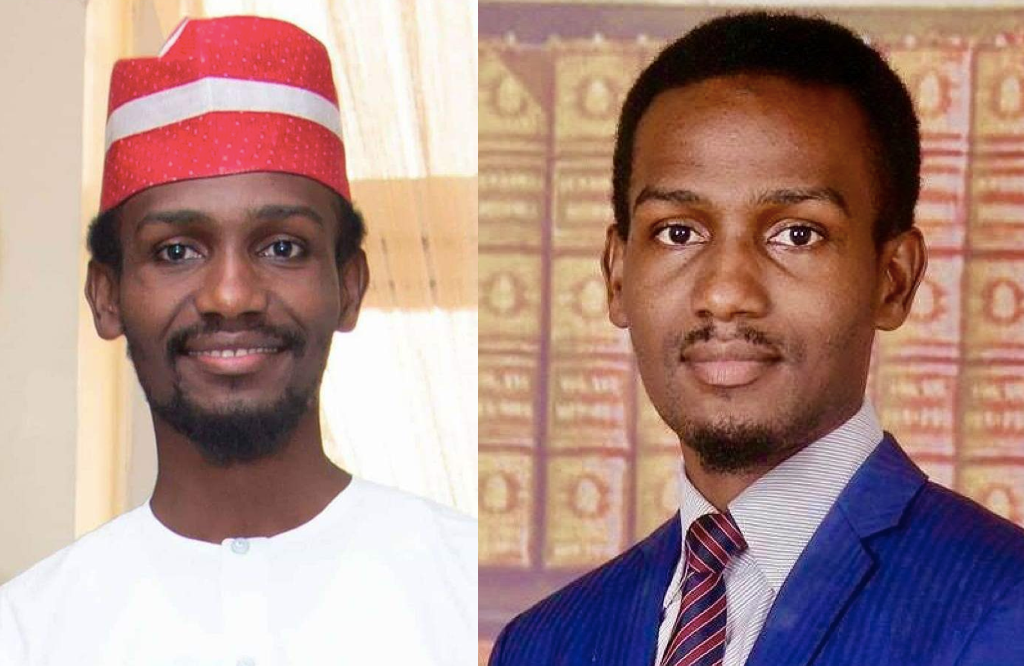
Dadiyata biography — the story of a Nigerian lecturer and fearless government critic who vanished without a trace. Explore his life, activism, family, and the search that continues today.
Need to Know About Dadiyata (Abubakar Idris)
- Real name: Abubakar Idris, known publicly as Dadiyata
- Was a lecturer in the Department of English and Linguistics, Federal University Dutsin-Ma, Katsina State
- A vocal critic of Nigeria’s ruling APC government and strong supporter of the Kwankwasiyya movement
- Abducted at gunpoint from his home in Barnawa, Kaduna State, on the night of August 2, 2019
- His wife, Khadija, witnessed the abduction from their window
- His whereabouts remained unknown as of 2026, nearly seven years after he disappeared
- His case triggered the global #WhereIsDadiyata campaign
- In February 2026, Nigeria’s DSS formally reopened its investigation into his disappearance
- Under Section 164(1) of Nigeria’s Evidence Act, he could be legally presumed dead by 2026
Who Is Dadiyata?
Abubakar Idris, widely recognised by his online name Dadiyata, was a Nigerian academic, social media commentator, and political activist who became one of northern Nigeria’s most outspoken critics of the government before his forced disappearance in 2019. He taught in the Department of English and Linguistics at the Federal University Dutsin-Ma in Katsina State and used social media, particularly Twitter, to challenge those in power, condemn corruption, and advocate for ordinary Nigerians. His case has become one of Nigeria’s most unresolved and heavily documented enforced disappearances, drawing condemnation from Amnesty International, Human Rights Watch, and press freedom organisations around the world.
Profile Snapshot: Key Facts About Dadiyata
| Detail | Information |
|---|---|
| Full Name | Abubakar Idris |
| Known As | Dadiyata |
| Age at Disappearance | 34 years old |
| Place of Origin | Northern Nigeria |
| Nationality | Nigerian |
| Religion | Islam |
| Profession | Lecturer, Social Media Commentator, Activist |
| Employer | Federal University Dutsin-Ma, Katsina State |
| Department | English and Linguistics |
| Political Affiliation | Peoples Democratic Party (PDP); Kwankwasiyya movement |
| Wife | Khadija Ahmed Lane |
| Children | Two |
| Date of Abduction | August 2, 2019 |
| Location of Abduction | Barnawa, Kaduna State, Nigeria |
| Current Status | Missing (as of 2026) |
| Campaign Hashtag | #WhereIsDadiyata |
Early Life & Background
Abubakar Idris grew up in northern Nigeria, shaped by the region’s long tradition of Islamic scholarship, communal debate, and civic consciousness. While specific details about his childhood and parents are not comprehensively documented in public records, what is clear from his adult life is that he was deeply invested in education, language, and political thought from an early stage.
He built his academic career around English Language and Linguistics, eventually securing a position as a lecturer at the Federal University Dutsin-Ma in Katsina State, where he taught the History of the English Language among other courses. Those who knew him described a man who was analytical, principled, and not afraid to hold positions that made powerful people uncomfortable.
His decision to use social media as a platform for political commentary was not reckless. It was deliberate. He understood the power of language and chose to direct it toward accountability.
Education & Academic Career
Dadiyata pursued education at a level that led him to a university lecturing role, specialising in the intersection of English language history and applied linguistics. He lectured at the Federal University Dutsin-Ma in Katsina State, a federal institution in Nigeria’s northwest, within the Department of English and Linguistics.
Colleagues described him as a committed educator who brought the same critical energy to his classroom that he brought to his online commentary. Teaching was not a backup plan for Dadiyata. It was his vocation, and he held it alongside his activism without treating either as less important than the other.
Career as a Government Critic and Social Media Activist
The Voice Behind the Screen
Before his disappearance, Dadiyata had built a significant following on Twitter, where he posted regularly about governance failures, unpaid salaries in Kogi State, the policies of the Buhari administration, and what he saw as the mismanagement of northern Nigerian states. He was particularly vocal about the government of then-Kano State Governor Abdullahi Ganduje, whom he criticised frequently and by name.

He was a committed member of the Kwankwasiyya movement, the political and social network built around former Kano Governor and presidential aspirant Rabiu Musa Kwankwaso. This alignment made him a natural opponent of the ruling APC, and he engaged in vigorous political debates online as a member of the Peoples Democratic Party (PDP).
What Made Him Different
What set Dadiyata apart from many commentators of his time was that he was not anonymous. He wrote under a consistent pseudonym, maintained a recognisable public presence, and made no attempt to hide his political positions. He understood the risks this carried in an environment where critics of the government regularly faced harassment, arrest, and pressure.
He had no criminal record. Everyone who documented his activism confirmed that his opposition was expressed through words and argument, never through violence or incitement.
“He was an activist who devoted himself to that aspect and had no record of criminality.” — Daily Trust
The Abduction: Night of August 2, 2019
The night of August 2, 2019 changed everything. At around 1:00 a.m., Dadiyata drove into the compound of his family home in the Barnawa neighbourhood of Kaduna State. As he stepped out of his BMW, armed men who had followed him seized him at gunpoint and forced him into the vehicle. His wife, Khadija Ahmed Lane, was inside the house and watched from the window as her husband was taken.
His car disappeared with him. No ransom demand was made. No organisation claimed responsibility. He simply vanished.
The police later confirmed that the abductors had entered the compound. No group ever came forward, and Nigerian security agencies, including the Kaduna State Government and the Department of State Services (DSS), initially issued denials rather than substantive investigative responses.
Khadija described the scene years later in an interview:
“He was taken from our house. He was making a phone call; his car was still running.”
The #WhereIsDadiyata Campaign
Within days of his disappearance, Nigerians took to social media under the hashtag #WhereIsDadiyata, demanding answers from the government. The campaign grew steadily over the months that followed, drawing in civil society organisations, journalists, human rights lawyers, and international bodies.

Amnesty International classified his case as an enforced disappearance and repeatedly called on Nigerian authorities to conduct a transparent investigation and disclose his whereabouts. Human Rights Watch and press freedom organisations also documented the case and pushed for accountability.
The campaign did not fade the way such campaigns often do. Each anniversary of his disappearance reignited public attention. The hashtag #OneYearWithoutDadiyata trended in August 2020, and similar mobilisations occurred in 2021, 2022, and beyond, with activists refusing to let the case be quietly buried.
Timeline of Key Events
| Date | Event |
|---|---|
| August 2, 2019 | Abducted at gunpoint from his home in Barnawa, Kaduna |
| August 2019 | #WhereIsDadiyata campaign begins on social media |
| August 2019 | Amnesty International declares his case an enforced disappearance |
| August 2020 | #OneYearWithoutDadiyata trends as anniversary arrives with no answers |
| 2022 | Dadiyata’s mother passes away without learning her son’s fate |
| May 2025 | Journalist Damilola Adekunle launches a ₦10 million reward fund for credible information |
| June 2025 | Adekunle’s independent investigation reportedly confirms his death |
| February 14, 2026 | Former Governor El-Rufai publicly denies involvement; points to Kano government |
| February 2026 | DSS formally reopens investigation; suspects invited for questioning |
| February 2026 | DSS reportedly seizes El-Rufai’s passport amid ongoing probe |
| May 2026 | Former Matawalle aide alleges Dadiyata was killed; claim draws calls for investigation |
What This Timeline Shows
- Nearly seven years passed between the abduction and any formal reopening of the investigation
- His family lived through his mother’s death and years of unanswered questions without closure
- Public pressure from civil society, not government initiative, drove every major moment of renewed attention
- As of 2026, political figures continue to deflect responsibility rather than cooperate fully
Personal Life: Wife, Children & Family
Dadiyata was married to Khadija Ahmed Lane, who has remained one of the most consistent voices calling for answers since the night she watched her husband being taken from their home. She has two children, both of whom grew up asking questions their mother could not answer.
In a 2026 video interview with Reno Omokri, Khadija spoke with quiet determination:

“We pray that one day, he will come back. They should please do whatever they can to help us know his whereabouts, if he’s alive or not.”
Her plea became widely shared across Nigeria and was accompanied by Omokri’s public appeal to Kaduna State Governor Uba Sani to provide the family with practical support, including housing assistance, educational support for their children, and employment help for Khadija. Omokri stated plainly that Nigeria owed the family a duty of care.
In 2022, Dadiyata’s mother passed away at the 44 Nigerian Army Reference Hospital in Kaduna while still waiting for news of her son. She died without knowing what had happened to him.
Legal Status and the Seven-Year Threshold
Under Section 164(1) of Nigeria’s Evidence Act (2011), a person who has not been seen or heard from for seven years can be legally presumed dead in a court of law. As Dadiyata disappeared in August 2019, that threshold arrives in August 2026, setting a sobering legal deadline that activists and journalists flagged publicly through early 2026.
The Foundation for Investigative Journalism noted this timeline and raised the alarm that the window for finding him alive was narrowing, while official investigations remained frustratingly thin on results.
Controversies, Political Accusations & the Ongoing Probe
El-Rufai’s Denial
The case attracted renewed political controversy in February 2026 when former Kaduna State Governor Nasir El-Rufai publicly denied any connection to Dadiyata’s disappearance, claiming that Dadiyata was primarily a critic of the Kano State government, not Kaduna:
“Dadiyata was not a fierce critic of the Kaduna State government. He was a fierce critic of the Kano State government. If anybody is to be asked, it is the Kano State Government.”
Ganduje’s Counter-Denial
Former Kano State Governor Abdullahi Ganduje rejected that framing, calling it “reckless” and “a clear attempt to shift responsibility,” and noting that Dadiyata’s critics and supporters alike acknowledged his criticism had been directed at the Kano administration.
DSS Investigation Reopened
Despite the public back-and-forth, the Department of State Services confirmed in February 2026 that the investigation had been formally reopened. Reports from security sources indicated that El-Rufai’s sons were among those to be invited for questioning, and that El-Rufai’s passport had been seized at Abuja’s Nnamdi Azikiwe International Airport to prevent international travel during the probe.
The Allegation of Death
In May 2026, a former aide to ex-Zamfara Governor Matawalle publicly alleged that Dadiyata had been killed, claiming to have been present. Political observers described the claim as too serious to ignore, with calls for a formal government response growing louder.
Impact and Legacy: A Symbol That Outlasted His Silence
Whether Abubakar Idris is alive or not, the impact of what happened to him has shaped Nigeria’s conversation about press freedom, enforced disappearances, and the safety of government critics in ways that cannot be undone.
His case is among the most cited examples in regional human rights reporting, referenced in Amnesty International publications, international press freedom indices, and academic research on political repression in West Africa. For many Nigerian journalists and commentators, Dadiyata’s name became a benchmark. When activists face threats, they invoke him. When government harassment is discussed, his disappearance is the reference point.
His wife’s ongoing public presence, refusing silence, refusing to stop asking, has itself become part of the legacy. Khadija’s persistence represents a form of activism that Dadiyata, in his time, would have recognised and respected.
Frequently Asked Questions: The Dadiyata Case
Who is Dadiyata?
Dadiyata is the online name of Abubakar Idris, a Nigerian university lecturer and political activist who was abducted from his home in Kaduna State on August 2, 2019, and has not been found since.
What happened to Dadiyata?
Armed men seized him at approximately 1:00 a.m. as he arrived at his home in Barnawa, Kaduna. His car was taken along with him. No ransom was demanded, no group claimed responsibility, and Nigerian authorities have not produced a definitive answer about his fate despite nearly seven years of public pressure.
Is Dadiyata dead?
His death has not been officially confirmed. In June 2025, investigative journalist Damilola Adekunle stated that her independent inquiry had confirmed his death, and in May 2026 a former political aide publicly alleged he was killed. Both remain unverified claims pending formal legal findings.
Who is Dadiyata’s wife?

His wife is Khadija Ahmed Lane, who witnessed his abduction and has been a consistent advocate for truth and justice ever since. She has two children and continues to speak publicly about the family’s experience.
What is the #WhereIsDadiyata campaign?
It is a social media and civil society campaign launched shortly after his disappearance, calling on the Nigerian government to account for his whereabouts and conduct a proper investigation. It has remained active for over six years.
Has anyone been arrested for Dadiyata’s disappearance?
As of early 2026, no one has been formally arrested or prosecuted. The DSS reopened its investigation in February 2026 and is reported to be inviting individuals for questioning, but no charges have been filed.
Why was Dadiyata targeted?
No official reason has ever been given. Those who documented his activism point to his outspoken criticism of the Buhari administration, the Kano State government under Ganduje, and the ruling APC as the most likely motive behind his abduction.