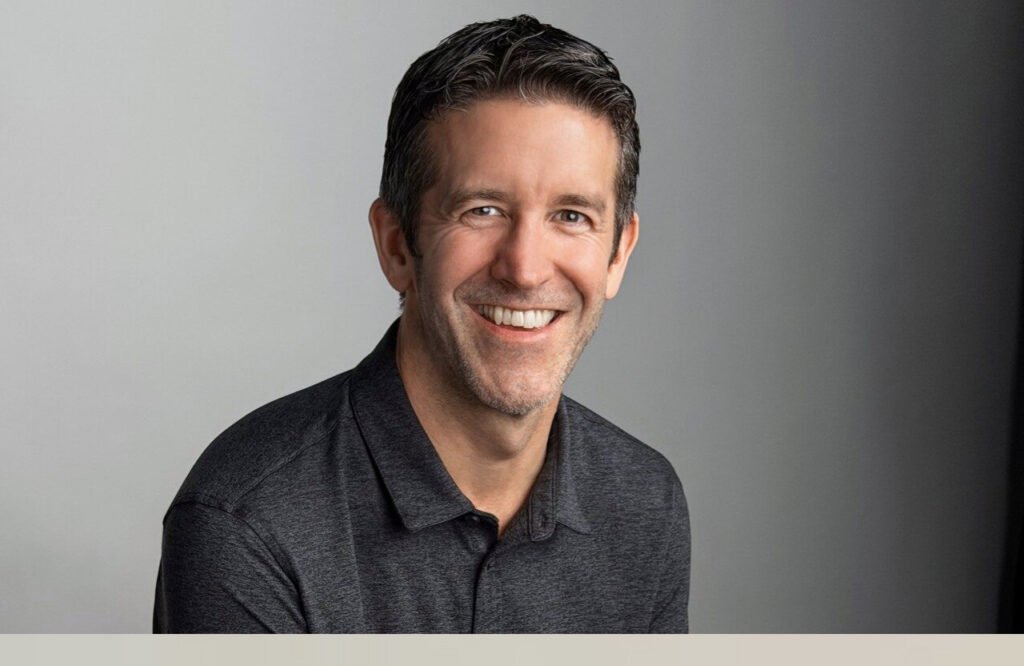
John Ternus biography – Apple’s incoming 8th CEO, his 25-year journey from Cinema Display engineer to hardware chief, swimming background, and Tim Cook succession details revealed.
Who is John Ternus?
John Ternus represents the engineering excellence and quiet innovation that has defined Apple’s culture for decades. At 51 years old (as of 2026), this mechanical engineer turned technology executive is poised to become Apple’s eighth CEO on September 1, 2026, succeeding Tim Cook after his remarkable 15-year tenure at the helm of the world’s most valuable technology company.
Born in 1975, Ternus has spent nearly half his life—25 years—at Apple, joining the company in 2001 fresh from a brief stint at a virtual reality startup. His journey from working on the Apple Cinema Display as his first project to leading all hardware engineering represents one of the most successful internal career progressions in Silicon Valley history. Currently serving as Senior Vice President of Hardware Engineering, he oversees the teams responsible for iPhone, iPad, Mac, Apple Watch, AirPods, and Apple Vision Pro.
What distinguishes Ternus from many tech executives is his engineering-first mindset combined with genuine humility. In his 2024 commencement speech at the University of Pennsylvania, he candidly admitted experiencing imposter syndrome when starting at Apple, questioning whether he truly belonged among such talented colleagues. This vulnerability, paired with his technical brilliance and leadership capabilities, has earned him respect throughout Apple’s ranks.
Tim Cook’s description of his successor captures Ternus’s unique qualities: “He has the mind of an engineer, the soul of an innovator, and the heart to lead with integrity and with honor.” As Ternus prepares to guide Apple through critical challenges including revamping its AI strategy and maintaining product innovation, the tech world watches with anticipation to see how this low-profile engineering leader will shape one of humanity’s most influential companies.
Quick Profile: John Ternus
| Personal Information | Details |
|---|---|
| Full Name | John Ternus |
| Birth Year | 1975 |
| Age (2026) | 51 years old |
| Current Role | Senior Vice President of Hardware Engineering (until Sept 2026) |
| Future Role | Chief Executive Officer (from September 1, 2026) |
| Education | B.S. in Mechanical Engineering, University of Pennsylvania (1997) |
| First Job | Mechanical Engineer, Virtual Research Systems |
| Years at Apple | 25 years (joined 2001) |
| First Apple Project | Apple Cinema Display |
| Reports To | Tim Cook |
| College Sport | Men’s Swimming Team, University of Pennsylvania |
| Wife/Family | Not publicly disclosed (maintains strict privacy) |
| Appointment Date | April 20, 2026 |
| CEO Effective Date | September 1, 2026 |
Academic Foundation and Athletic Achievement
University of Pennsylvania Years
John Ternus’s path to Apple leadership began at the University of Pennsylvania’s School of Engineering and Applied Science, where he pursued a Bachelor of Science in Mechanical Engineering. He graduated in 1997, a period when the internet revolution was transforming technology and society.
His academic focus on mechanical engineering proved prophetic, as this discipline would later enable him to lead the hardware teams creating some of the world’s most sophisticated consumer electronics. The rigorous Penn engineering curriculum emphasized both theoretical understanding and practical problem-solving skills that would serve him throughout his career.
Swimming Champion
While excelling academically, Ternus distinguished himself athletically as a member of Penn’s men’s swimming team. This competitive swimming background reveals important aspects of his character: discipline, persistence, physical endurance, and the ability to perform under pressure. These traits, honed in the pool, would later manifest in his approach to product development and leadership.
Swimming at the collegiate level requires balancing intense training schedules with demanding academic coursework, demonstrating time management skills and commitment to excellence in multiple domains. The individual and team aspects of competitive swimming may have also shaped his approach to collaboration and leadership.
Senior Engineering Project
For his senior capstone project, Ternus designed and developed a mechanical feeding arm that could be operated by individuals with quadriplegia using only head movements. This project exemplified his engineering philosophy: creating technology that meaningfully improves human lives.

This early focus on assistive technology and human-centered design foreshadowed the accessibility features that would later become integral to products he helped develop at Apple. The project demonstrated his ability to identify real human needs and engineer practical solutions—qualities that would define his career.
Early Career and Path to Apple
Virtual Research Systems
After graduating from Penn in 1997, Ternus’s first professional position was as a mechanical engineer at Virtual Research Systems, a small company specializing in virtual reality devices. This startup experience provided him with hands-on engineering work in emerging technology during VR’s early experimental phase.
Working at a small VR company in the late 1990s gave Ternus exposure to cutting-edge technology development in an entrepreneurial environment. This experience with immersive technology would prove remarkably relevant decades later when he would oversee development of Apple Vision Pro, Apple’s spatial computing headset.
The contrast between a small startup and Apple’s corporate structure would later inform his understanding of how to maintain innovation and agility even within large organizations. His brief time in the VR industry demonstrated his interest in technologies that expand human capabilities and experiences.
Joining Apple in 2001
In 2001, at approximately 26 years old, John Ternus joined Apple’s product design team as only his second job out of college. This timing placed him at Apple during a pivotal period—after Steve Jobs had returned to rescue the struggling company but before the revolutionary iPhone would transform Apple into the world’s most valuable corporation.
His first assignment was working on the Apple Cinema Display, a line of plastic monitors that represented Apple’s commitment to design excellence even in peripheral products. This seemingly modest beginning taught him Apple’s exacting standards for industrial design, manufacturing precision, and user experience.
Joining Apple in 2001 meant working in a company culture that valued perfection, secrecy, and relentless iteration. Ternus absorbed these values during his formative years at the company, learning from leaders who had rebuilt Apple from near bankruptcy into a profitable innovator.
Quarter-Century at Apple: A Career Built on Hardware Excellence
Early Years and iPad Development
During his first decade at Apple, Ternus worked across various hardware engineering projects, steadily building expertise and earning increasing responsibilities. When Apple launched the iPad in 2010, Ternus was part of the hardware engineering team that brought this revolutionary product category to life.

The iPad represented a massive engineering challenge: creating a tablet computer that was simultaneously powerful, portable, affordable, and intuitive. Ternus’s contributions to iPad development demonstrated his ability to solve complex engineering problems while maintaining Apple’s design aesthetic.
His work on successive iPad generations taught him how to manage product evolution, balancing innovation with user familiarity, and improving specifications while controlling costs. These skills would prove essential as he took on broader leadership responsibilities.
AirPods Innovation
Ternus also played crucial roles in developing AirPods, Apple’s wireless earbuds that redefined the audio accessory market. The AirPods project required solving extraordinary miniaturization challenges, integrating sensors and processors into tiny form factors, and creating seamless connectivity experiences.
The success of AirPods demonstrated Ternus’s capability to lead teams working at the cutting edge of hardware integration. These completely wireless earbuds became cultural icons and immensely profitable products, validating his engineering leadership and market instincts.
Mac Evolution and Apple Silicon Transition
Ternus oversaw hardware engineering for multiple Mac generations, including the transformative transition from Intel processors to Apple’s custom silicon chips. This transition represented one of the most ambitious hardware engineering projects in computing history, requiring redesigning the entire Mac lineup around new processors.
The Apple Silicon transition succeeded spectacularly, delivering Macs with dramatically improved performance and battery life while maintaining software compatibility. Ternus’s leadership during this transition proved his capacity to execute complex, multi-year technical initiatives affecting millions of users.
iPhone Leadership
Perhaps most significantly, Ternus led hardware engineering work on numerous iPhone generations, including the recent models integrating artificial intelligence capabilities. The iPhone remains Apple’s most important product, generating majority revenue and defining Apple’s brand globally.

Leading iPhone hardware engineering means balancing innovation with manufacturing at unprecedented scale—Apple produces hundreds of millions of iPhones annually. Ternus mastered the challenges of global supply chains, manufacturing partnerships, and component sourcing while pushing technological boundaries.
Rise Through Apple’s Leadership Ranks
Vice President of Hardware Engineering (2013)
In 2013, John Ternus was promoted to Vice President of Hardware Engineering, reporting to Dan Riccio, Apple’s Senior Vice President of Hardware Engineering at the time. This promotion recognized his technical excellence and growing leadership capabilities.
As VP, Ternus took on broader responsibilities across multiple product lines, managing larger teams and contributing to strategic product decisions. This role positioned him as part of Apple’s extended leadership team, though still largely unknown outside the company.
Public-Facing Role at Apple Events
Beginning around 2018, Ternus started appearing on stage at Apple product launch events and WWDC developer conferences. He presented new hardware including iMac refreshes, MacBook Pro updates, the 2018 iPad Pros, the iMac Pro, and the completely redesigned 2019 Mac Pro.
These public appearances marked a shift in Ternus’s role from behind-the-scenes engineer to public face of Apple hardware. His presentations demonstrated clear communication skills and comfort with public speaking, important qualities for future CEO consideration.
His presentation style reflected his engineering background—detailed, precise, enthusiastic about technical specifications—while remaining accessible to general audiences. This ability to translate complex engineering into compelling narratives served him well as he became more prominent.
Senior Vice President of Hardware Engineering (2021)
In 2021, Ternus received another major promotion to Senior Vice President of Hardware Engineering, assuming the role previously held by Dan Riccio. This position placed him in direct reporting relationship to CEO Tim Cook and made him responsible for all hardware engineering across Apple’s product ecosystem.
As SVP, Ternus led the teams behind every major Apple hardware product: iPhone, iPad, Mac, Apple Watch, AirPods, and the newly developing Apple Vision Pro. This role gave him complete oversight of Apple’s hardware strategy and execution, managing thousands of engineers worldwide.

The 2021 promotion effectively positioned Ternus as heir apparent to Tim Cook, though Apple maintained its characteristic secrecy about succession plans. Industry observers noted that Ternus’s age—15 years younger than Cook—suggested Apple sought long-term leadership continuity.
The Historic CEO Appointment
April 20, 2026 Announcement
On Monday, April 20, 2026, Apple made its most significant leadership announcement in over a decade. Tim Cook announced he would step down as CEO on September 1, 2026, and become Executive Chairman of Apple’s Board of Directors. John Ternus would succeed him as the company’s eighth CEO.
The announcement ended years of speculation about Cook’s succession plans. Apple published images of Cook and Ternus walking together at Apple Park in Cupertino, symbolizing the leadership transition and continuity of vision.
Cook’s statement praised his successor: “It has been the greatest privilege of my life to be the CEO of Apple and to have been trusted to lead such an extraordinary company. I love Apple with all of my being,” adding that Ternus has “the mind of an engineer, the soul of an innovator, and the heart to lead with integrity and with honor.”
Industry Reaction
Wall Street analysts and technology industry observers largely welcomed the appointment. Morgan Stanley analysts noted that “promoting him to CEO clearly shows Apple’s emphasis on product at the center of the flywheel will remain,” suggesting confidence in Apple’s product-focused strategy.
The appointment continued Apple’s tradition of internal promotion for CEO succession—both Steve Jobs and Tim Cook came from within the company rather than external recruitment. This approach maintains cultural continuity and institutional knowledge.
Some analysts view the CEO transition as potentially catalyzing renewed optimism about Apple’s future, particularly regarding artificial intelligence strategy where the company has faced criticism for lagging competitors.

September 1, 2026 Transition
The announcement provided a five-month transition period before Ternus officially assumes the CEO role on September 1, 2026. During this period, Cook remains CEO while working closely with Ternus to ensure smooth leadership handover.
This extended transition allows Ternus to prepare for the immense responsibilities of leading a company with market capitalization exceeding $3 trillion, global operations spanning dozens of countries, and hundreds of thousands of employees worldwide.
The September 1 effective date also positions Ternus to present new products at Apple’s traditional fall iPhone launch event in his capacity as CEO, potentially marking a new era for the company.
Major Challenges Facing the New CEO
Artificial Intelligence Strategy
Perhaps Ternus’s most pressing challenge is revamping Apple’s artificial intelligence strategy, widely viewed as lagging behind competitors including Google, Microsoft, and OpenAI. Apple recently enlisted Google’s Gemini to power some AI features and has experienced development setbacks with its AI-enhanced Siri.
The AI challenge tests Ternus’s vision for integrating cutting-edge technology into Apple products while maintaining the company’s privacy commitments and user experience standards. His engineering background may prove valuable in understanding AI capabilities and limitations.
Success in AI could define Ternus’s legacy as CEO, while failure might undermine Apple’s competitive position in the technology industry’s most important emerging category.
China Market Complexity
Ternus inherits a complex relationship with China, Apple’s largest market outside the United States. The geopolitical tensions between the US and China, combined with rising Chinese smartphone competitors, present ongoing challenges.
Tim Cook invested heavily in China relationships through frequent visits and diplomatic engagement. Whether Ternus will replicate these “charm offensives” or pursue different strategies remains to be seen.

Product Innovation Pipeline
Maintaining Apple’s reputation for groundbreaking product innovation presents constant pressure. Under Ternus’s leadership, over 10 new products are rumored for launch, but he must balance evolution of existing products with developing entirely new categories.
The Apple Vision Pro represents one major bet on spatial computing’s future, but its high price and limited initial adoption raise questions about mass market potential. Ternus must decide how aggressively to pursue this category.
Regulatory Scrutiny
Apple faces antitrust investigations and lawsuits in both the United States and Europe, examining its App Store policies, competitive practices, and market dominance. Navigating these regulatory challenges while maintaining shareholder value will test Ternus’s diplomatic and strategic skills.
Personal Life and Private Nature
Maintained Privacy
Unlike many technology executives who cultivate public personas through social media and interviews, John Ternus maintains strict privacy regarding his personal life. No confirmed information exists about whether he is married, has children, or details about his parents and upbringing.
This discretion follows Apple’s corporate culture that prioritizes products and brand over individual executive personalities. Tim Cook similarly maintained significant privacy despite his CEO role, though he did publicly discuss his sexual orientation.
Media searches for “John Ternus wife” or family details consistently return no verified information. Some genealogical records mention historical figures with the same name, but these have no connection to the Apple executive.
California Residence
Ternus currently resides in the San Francisco Bay Area near Apple’s Cupertino headquarters, though specific location details remain undisclosed. His proximity to Apple Park enables the intensive work schedule required of senior executives.

Fitness and Health Interests
His swimming background suggests ongoing interest in fitness and health. As a leader overseeing Apple Watch development, he reportedly discusses the device’s engineering in the context of health and movement, indicating personal engagement with fitness technology.
Leadership Philosophy and Values
Engineering-First Mindset
Ternus embodies an engineering-first leadership philosophy, prioritizing technical excellence and innovation grounded in solving real problems. His 2024 Penn commencement speech emphasized “putting care into every detail,” reflecting his meticulous approach.
This philosophy aligns with Steve Jobs’s product-obsessed leadership while potentially differing from Tim Cook’s operations-focused approach. The engineering perspective may influence product strategy, resource allocation, and organizational priorities.
Humility and Self-Doubt
Remarkably for a future CEO of the world’s most valuable company, Ternus publicly acknowledged experiencing self-doubt early in his Apple career, stating “I wasn’t sure I belonged.” This vulnerability suggests leadership grounded in empathy rather than ego.
His willingness to discuss imposter syndrome may inspire employees facing similar doubts and creates relatability despite his extraordinary achievements. This authentic leadership style could shape Apple’s culture during his tenure.
Integrity and Honor
Tim Cook’s characterization of Ternus as having “the heart to lead with integrity and with honor” suggests ethical leadership as a defining quality. In an industry sometimes criticized for prioritizing growth over values, this emphasis on integrity signals continuity with Apple’s stated principles.
Frequently Asked Questions About John Ternus
How old is John Ternus?
John Ternus is 51 years old as of 2026, having been born in 1975.

Is John Ternus married?
Ternus maintains strict privacy about his personal life, and there is no publicly confirmed information about whether he is married or has children.
When does John Ternus become Apple CEO?
He officially becomes Apple’s eighth CEO on September 1, 2026, succeeding Tim Cook who will transition to Executive Chairman.
How long has John Ternus worked at Apple?
Ternus has worked at Apple for 25 years, joining the company in 2001 as a member of the product design team.
What was John Ternus’s first project at Apple?
His first project at Apple was working on the Apple Cinema Display, a line of monitors.
What products has John Ternus overseen at Apple?
As SVP of Hardware Engineering, he oversees all hardware including iPhone, iPad, Mac, Apple Watch, AirPods, and Apple Vision Pro, having contributed to multiple generations of each product line.