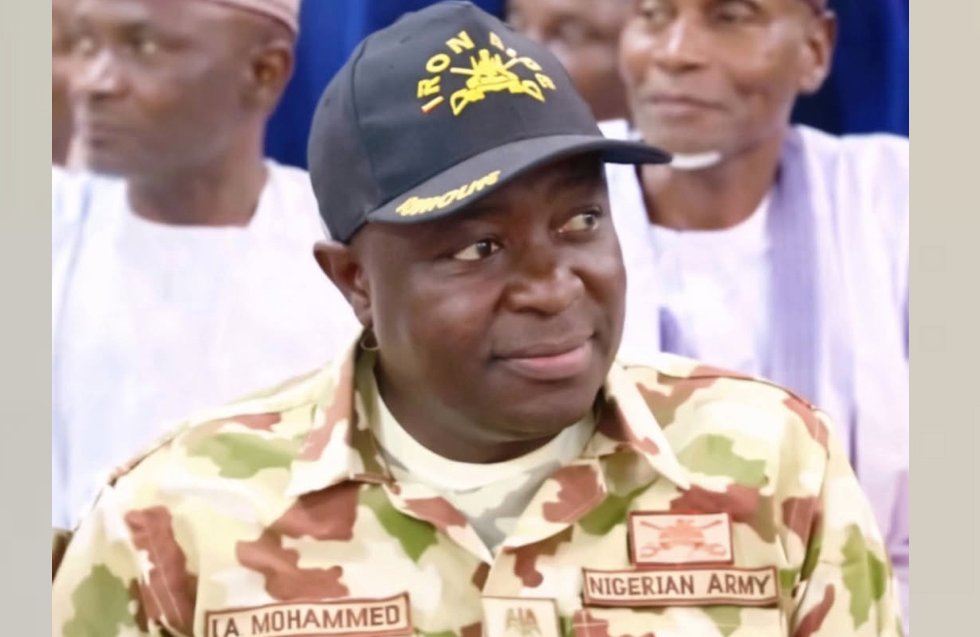
Colonel I.A. Muhammad biography – Brave Nigerian Army officer killed in Boko Haram ambush in Monguno, Borno State. Read about his heroic leadership, military career, and ultimate sacrifice.
Who is Colonel I.A. Muhammad?
Colonel I.A. Muhammad was a dedicated Nigerian Army senior officer who made the ultimate sacrifice in service to his nation. On the night of April 13, 2026, this courageous commander was killed during a Boko Haram ambush in Monguno, Borno State, while leading a reinforcement mission to rescue troops under heavy attack. His death represents one of the most significant losses suffered by the Nigerian military during the ongoing counter-insurgency operations in the North-East.
Serving with the 242 Battalion in Borno State, Colonel Muhammad embodied the qualities of selfless leadership that define Nigeria’s finest military officers. When insurgents launched a coordinated overnight assault on a Forward Operating Base (FOB) under his command, he did not hesitate to mobilize reinforcements and personally lead the rescue mission, despite the clear dangers involved.
The circumstances of his death underscore the daily risks faced by Nigerian troops battling terrorism in the country’s northeastern region. While advancing toward the embattled FOB to support his men, Colonel Muhammad’s convoy was struck by a remotely detonated Improvised Explosive Device (IED) planted by Boko Haram fighters. The sophisticated landmine attack, which was triggered precisely as his vehicle approached, killed him instantly along with several soldiers accompanying him.
Colonel Muhammad’s sacrifice occurred during one of the deadliest periods for the Nigerian military in recent months, with at least six senior officers killed by insurgents within a two-week span. His death sparked national mourning and renewed calls for enhanced protection for military personnel operating in high-risk zones.
Quick Facts: Colonel I.A. Muhammad
| Category | Details |
|---|---|
| Full Name | Colonel I.A. Muhammad |
| Rank | Colonel |
| Service Branch | Nigerian Army |
| Unit | 242 Battalion |
| Deployment Location | Monguno, Borno State |
| Date of Death | April 13, 2026 |
| Cause of Death | Boko Haram IED ambush |
| Location of Death | En route to FOB, Monguno |
| Age at Death | Not publicly disclosed |
| Status | Killed in Action (KIA) |
| Soldiers Killed Alongside | 21 soldiers |
| Burial | Expected at National Military Cemetery, Abuja |
Military Service and Deployment
Colonel I.A. Muhammad served as a senior commanding officer in one of Nigeria’s most volatile security environments. His posting to the 242 Battalion in Borno State placed him at the epicenter of the country’s fight against Boko Haram and Islamic State West Africa Province (ISWAP) insurgents, groups that have terrorized northeastern Nigeria since 2009.
Borno State has remained the heartland of the insurgency that has persisted for over 17 years, testing successive Nigerian administrations from President Umaru Yar’Adua through the current administration of President Bola Tinubu. Military operations in this theater demand exceptional courage, tactical skill, and unwavering dedication—qualities that Colonel Muhammad demonstrated throughout his service.

As a colonel commanding troops in Monguno, he oversaw military operations in a strategic location that hosts a large military camp with multiple sub-units. Monguno serves as a critical hub in the Nigerian military’s counter-insurgency architecture, housing battalions led by colonels and lieutenant colonels under the supervision of a General Officer Commanding.
The colonel’s responsibilities extended beyond conventional military command. Officers at his level must make split-second tactical decisions, maintain troop morale under extreme stress, coordinate with other military formations, and manage the complex logistics of sustained operations against an adaptive enemy employing asymmetric warfare tactics.
The Fatal Monguno Attack (April 13, 2026)
The Initial Assault
On the night of April 12-13, 2026, Boko Haram insurgents launched a coordinated attack on military positions in Monguno. The terrorists focused their initial assault on a smaller but critical military position—a Forward Operating Base (FOB)—that served as an advanced tactical position for the larger military camp.
Intelligence suggests the insurgents employed sophisticated planning to overwhelm the FOB, likely conducting reconnaissance beforehand to identify vulnerabilities and optimal attack vectors. The intensity of the assault prompted urgent distress calls for reinforcement from troops defending the position.

Colonel Muhammad’s Response
When news of the attack reached Colonel Muhammad, his response exemplified military leadership at its finest. “The Colonel got information that troops at the FOB were under heavy attack. As a committed commander, he mobilized to lead reinforcement to the location,” a military source revealed.
Rather than dispatching subordinates or coordinating support from a safe distance, Colonel Muhammad personally led the reinforcement convoy. This decision reflected the “lead from the front” philosophy that has characterized Nigerian military officers who have earned the respect and loyalty of their troops.
His immediate mobilization demonstrated situational awareness and tactical judgment. Understanding that rapid reinforcement was critical to preventing the FOB from being overrun, he assembled available forces and moved swiftly to support his embattled troops.
The Deadly Ambush
Tragedy struck before the colonel could reach his destination. While advancing toward the frontline, his convoy drove into a meticulously planned ambush executed by Boko Haram fighters who had anticipated the reinforcement route.

“He did not die inside the camp. He was on his way to support his men when Boko Haram fighters ambushed them with a controlled landmine. It was not the type you step on; it was detonated remotely at the exact moment his vehicle approached,” military sources explained.
The remotely detonated IED represented sophisticated insurgent tactics increasingly employed by Boko Haram. Unlike traditional landmines that explode upon contact, these controlled devices require operators to trigger them precisely when target vehicles pass, indicating advanced planning and technical capability.
The explosion killed Colonel Muhammad instantly, alongside 21 soldiers accompanying him in the reinforcement convoy. The attack highlighted the evolving threat posed by improvised explosive devices in Nigeria’s counter-insurgency operations and raised fresh concerns about convoy protection protocols.
Context: Rising Casualties Among Senior Officers
Colonel Muhammad’s death occurred within a broader pattern of intensified attacks targeting Nigerian military leadership. His sacrifice came just days after Brigadier General Oseni Braimah and several soldiers were killed on April 9, 2026, when Boko Haram and ISWAP terrorists launched a coordinated assault on a military base in Benisheikh, Borno State.

Earlier in 2026, the military suffered additional significant losses:
- March 9, 2026: Lieutenant Colonel Umar Farouq and other soldiers were killed when insurgents overran a military base in Kukawa LGA, Borno State
- March 6, 2026: Multiple soldiers were killed during several terrorist attacks across the state
- Within two weeks of Colonel Muhammad’s death, at least six senior officers had been killed by Boko Haram elements
This surge in attacks targeting high-ranking officers suggests insurgents have adopted deliberate strategies to eliminate military leadership, potentially aiming to demoralize troops and disrupt command structures. The pattern indicates coordinated planning rather than opportunistic violence.
Leadership and Sacrifice
Military sources consistently describe Colonel Muhammad as a “committed commander” whose dedication to his troops drove his decision to personally lead the reinforcement mission. This characterization speaks to leadership qualities that transcend formal rank—the willingness to share risks with subordinates rather than command from safe positions.
His decision to lead the convoy personally, while ultimately fatal, exemplified the military ethos that officers must never ask subordinates to undertake missions they themselves would avoid. This philosophy builds unit cohesion and inspires troops to perform courageously when they know their leaders share their dangers.

The fact that 21 soldiers died alongside the colonel indicates the convoy was substantial, suggesting he mobilized significant forces for the relief operation. That these troops followed him into danger without hesitation speaks to the trust and respect he commanded.
Government and Military Response
President Bola Tinubu, who has vowed to intensify Nigeria’s response to insurgent violence, faces mounting pressure to demonstrate results following this latest loss of military personnel. The conflict, which began in 2009 under President Umaru Yar’Adua, has tested every subsequent administration’s security capabilities.
The Nigerian Army has not immediately issued official statements confirming casualties or operational details, maintaining standard protocol of verifying information before public release. However, multiple military sources and soldiers serving in the North-East theater have confirmed the attack and casualties.
The attack underscores ongoing challenges in Nigeria’s counter-insurgency operations despite military claims of degrading Boko Haram capabilities. The insurgents’ ability to coordinate sophisticated attacks using advanced IED tactics indicates they retain operational capacity and tactical innovation.

Impact on Counter-Insurgency Operations
The loss of Colonel Muhammad and 21 soldiers represents both human tragedy and operational setback. Senior officers like colonels bring irreplaceable experience, institutional knowledge, and leadership capacity developed over years of service. Replacing such commanders requires time and disrupts unit cohesion.
The psychological impact on surviving troops cannot be underestimated. When soldiers witness commanders making ultimate sacrifices, it can simultaneously inspire greater dedication and instill fear that undermines operational effectiveness. Military leadership must carefully manage these competing psychological currents.
The attack also raises questions about force protection measures for reinforcement operations. That insurgents successfully predicted the reinforcement route and positioned IEDs accordingly suggests either intelligence leaks or predictable operational patterns that enemies exploit.
Questions About Vasundhara Yadav
1. Who was Colonel I.A. Muhammad?

He was a senior Nigerian Army officer serving with the 242 Battalion in Monguno, Borno State, who was killed in a Boko Haram IED ambush on April 13, 2026.
2. How did Colonel I.A. Muhammad die?
He was killed by a remotely detonated improvised explosive device while leading a reinforcement convoy to rescue troops under attack at a Forward Operating Base in Monguno.
3. When did the Monguno attack occur?

The attack occurred on the night of April 12-13, 2026, when Boko Haram insurgents launched coordinated assaults on military positions.
4. How many soldiers died with Colonel Muhammad?
At least 21 soldiers died alongside Colonel Muhammad in the IED ambush, bringing total casualties to at least 22 military personnel.
5. Where was Colonel Muhammad deployed?
He was deployed to Monguno, Borno State, serving with the 242 Battalion in one of Nigeria’s most active counter-insurgency zones.
6. What makes his death significant?
His death represents part of a disturbing pattern, with at least six senior Nigerian Army officers killed within two weeks, indicating intensified insurgent targeting of military leadership.